

When it comes to the work that Life & Legacy undertakes with Jewish organizations to promote current and after-lifetime giving to build endowments, an organization’s employees are just one part of the picture. Another key stakeholder in a strong culture of philanthropy is the volunteer.
With a tight budget and staff with large responsibility loads, an organization that can draw on the vital support of volunteers is far more likely to accomplish its mission and its goals.
Over my career as a fundraising consultant, I have worked with hundreds of organizations that engage volunteers to varying levels of success.
Take, for example, two meetings in one community at two similar-sized organizations:
The first meeting had 11 people laughing and noshing in a brightly lit room. The organizers said, “We have so many volunteers, we don’t know what to do with them all!” Then they proceeded to tell me all that they were accomplishing.
The second meeting consisted of two elderly grumpy men in a low-lit room. They complained that no one wanted to volunteer to help their organization. They said that they didn’t understand why, then revealed that one of them had been the organization’s president for nine years and that people fight at board meetings. “It’s awful, and we don’t understand why it happens,” he said.
This experience led me to ask myself, “Why do some organizations have a strong culture of volunteerism, while others flounder?” After much research on volunteerism and best practices, I came up with some answers — and recommendations.
Find volunteers who meet your organization’s why. People volunteer for a number of reasons. They may want to give back to an organization that has positively affected their life. Or they may want to use their skills to assist an organization that shares their values. Or both. When recruiting volunteers, look for people who have the skills you need for the task at hand and who have the heart for the mission of your organization. For Life & Legacy, we recommend that communities look for volunteers who want to build a vibrant and secure organization for the next generations.
Give volunteers specific, time-limited goals and tasks. Volunteers may really want to accomplish the task you have asked them to do. But they may not be able to make it a top priority in a very busy life. When you give them a time-bound assignment, they can track their progress against the calendar and, ideally, do the task in a well-paced way so that they can take on more when they are ready. Along the way, they will appreciate your gentle, kind reminders and your checking in to be sure they have the knowledge and resources to complete the task.
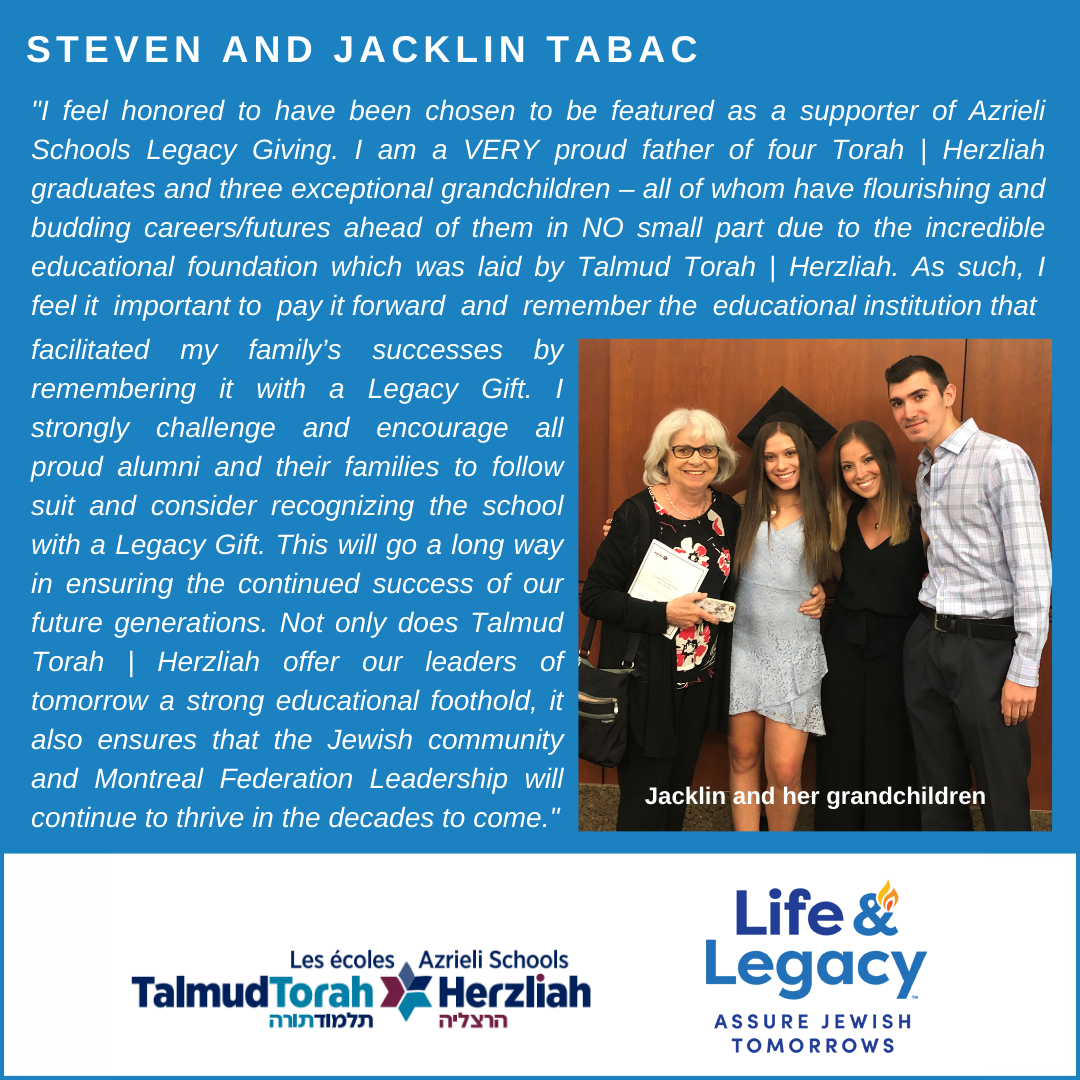
If you’re looking to engage a volunteer in legacy giving, ask them to introduce you to a great prospect. After they have, be sure to let the volunteer know how important their help was, how grateful you are, and that you hope they will volunteer again.Create an atmosphere of true appreciation! Periodically thank volunteers and ask them how the experience is going for them. By doing this, you will find out about any issues and resolve them quickly. Provide gentle reminders, celebrate success, and give ongoing feedback about how their work contributes to meeting the mission of the organization. Offer both personal thanks (phone calls, texts of encouragement, and maybe a birthday or holiday card) and public recognition (thanks in your newsletter, volunteer appreciation events, and posts about their work on your website and social media). Sharing the story of a great conversation, or wonderful donor testimonial can inspire everyone else. Take, for example, Montreal Herzliah’s social media post with a quote from a legacy donor, which was shared widely with donors and volunteers alike.
The big picture
Keep in mind that there are many ways for people to volunteer: sporadically, remotely, informally, formally, spontaneously, and task-specifically. Try giving a new volunteer something small and easily accomplished. Maybe they can introduce you to someone or make a thank-you phone call to a donor. When they accomplish this easy task, thank them generously. You will see that the next time you ask that person for assistance, they will be very likely to say yes. In this way, a person can dip their toe into your volunteer pool and if the experience is worthwhile, they may wade in deeper.
Accountability is also critical to volunteer success. It happens best when the volunteer sets their own deadline. When someone volunteers for something, thank them and ask, “When do you think you can begin?” Be sure to circle back to them at the time of that self-imposed deadline, by text, phone, or email, with curiosity and openness and, again, gratitude. If they haven’t completed the task, tell them that’s okay, and ask for a new completion date. Circle back when that date rolls around. If the volunteer is frustrated and not getting to it, offer to do it with them.
Volunteers who enjoy the experience are more likely to volunteer for other tasks. Treat volunteers well, ensure that they are confident about doing the tasks they have taken on, support them in creating and adhering to clear goals, and communicate clearly about their experience and your needs and expectations. By doing so, you can create a culture of volunteering and nurture lay-leaders who want to support the mission with their time, their talent, and their treasure.


